Women's Gold
The product in every jar of Two Leaf Baby has been made the same way for thousands of years. Not by a manufacturer. Not by a lab. By the women of West Africa.
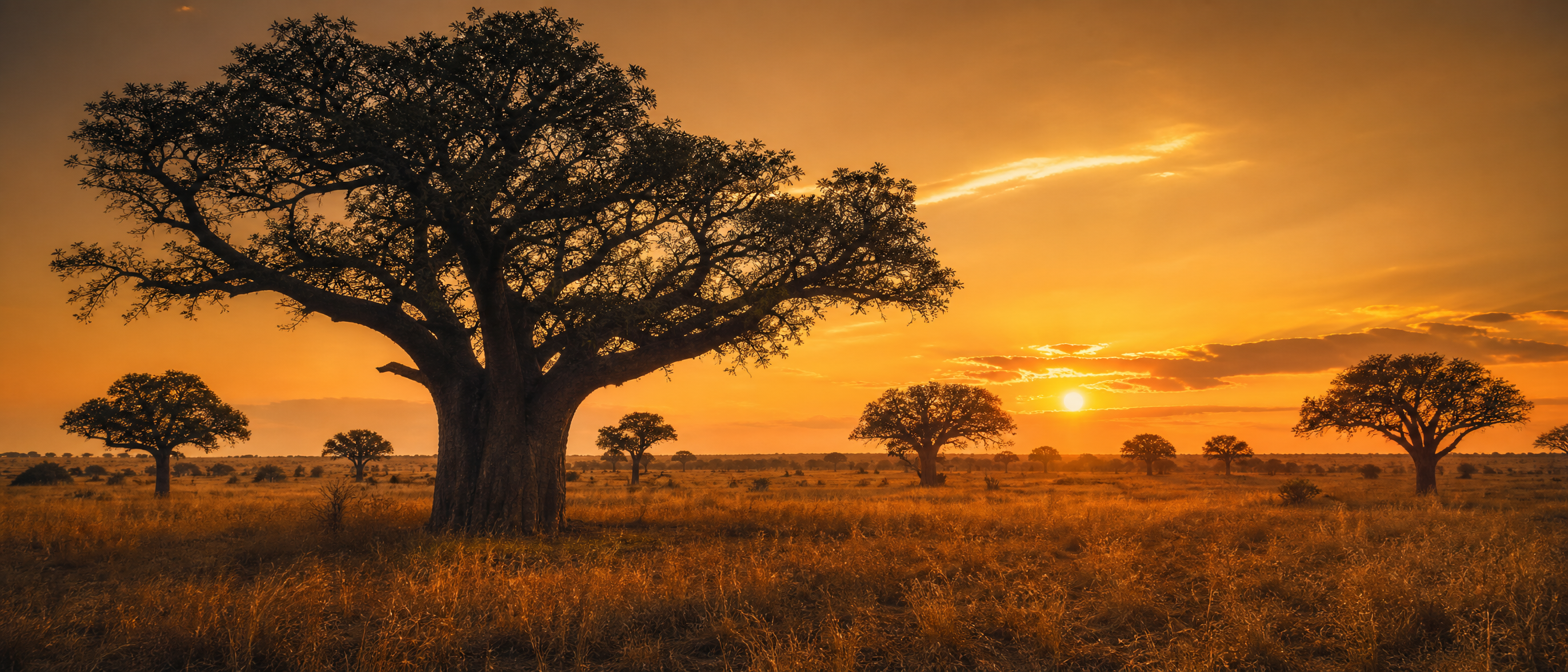
Long before shea butter appeared on store shelves in Houston or London or Tokyo, it was simply part of life across the shea belt of West Africa — a stretch of land running through Ghana, Burkina Faso, Mali, Nigeria, Senegal, Côte d'Ivoire, and more than a dozen other countries. The shea tree grew wild, untended, unpurchased. The fruit fell when it was ready. The women collected it.
They always have.
For generations — for centuries — the women of these communities have been the sole keepers of shea butter knowledge.
How to collect the nuts. How to crack them. How to roast them. How to grind them. How to knead the paste with water until the fat separates. How long to boil it. How to skim it. How to know when it is right.
No written recipe. No manufacturing facility. Hands, fire, water, and knowledge passed from mother to daughter across more lifetimes than any of us can count.
The process that creates what arrives in a jar.
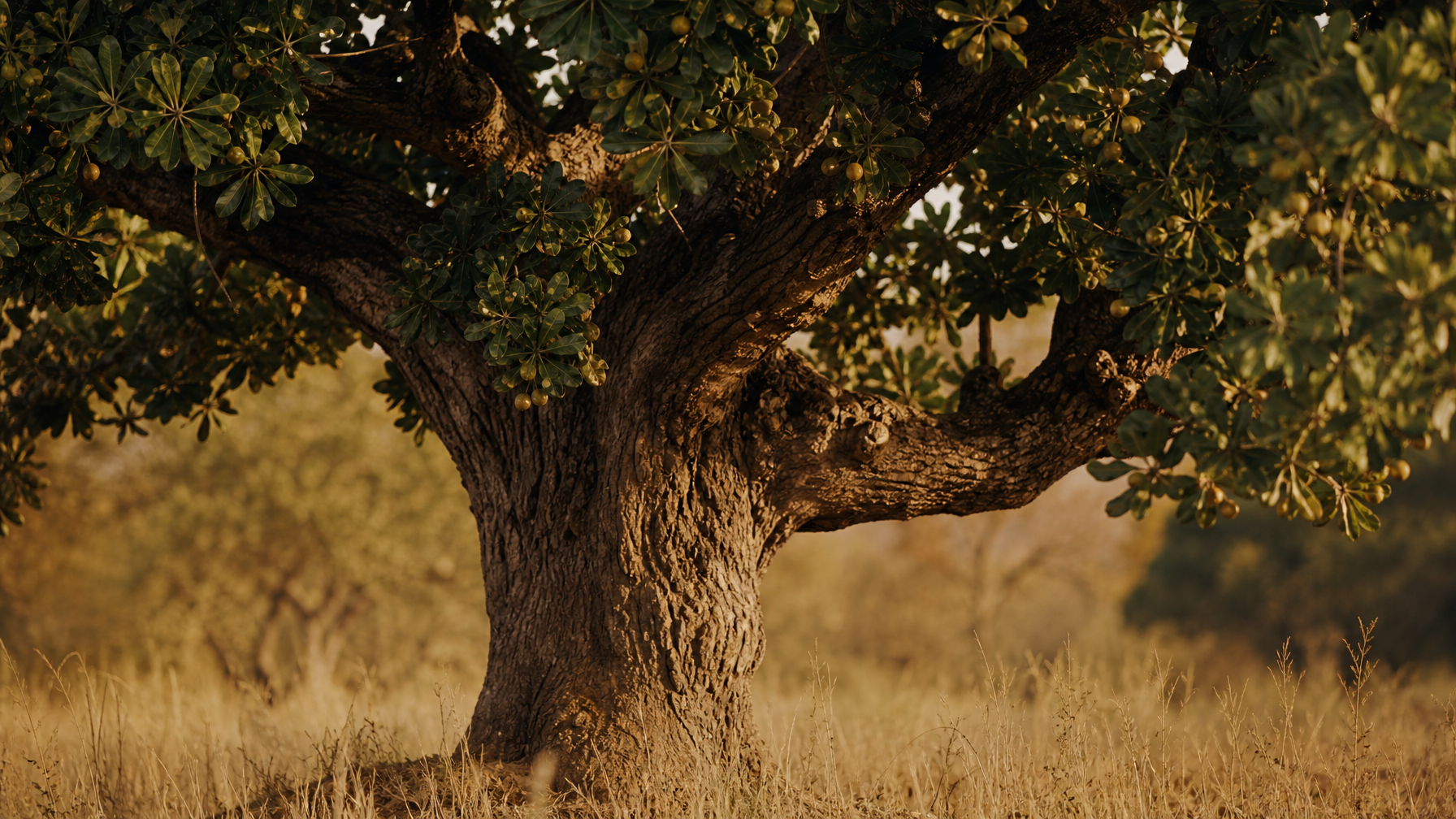
When a jar of shea butter arrives in a warehouse in the United States, the work that created it has already been invisible for a long time. It starts with the walk. Women walk miles across the savanna after the nuts fall from the wild shea trees — trees that cannot be cultivated, that grow on their own timeline, in their own places. You go to them.
The Walk
Women walk miles across the savanna to collect nuts that have fallen naturally from wild shea trees. The trees cannot be farmed or cultivated. You go to them on their schedule.
Boiling & Sun Drying
The collected nuts are boiled then spread across the ground to dry in the sun. This begins the process of separating the outer fruit from the kernel inside.
Cracking by Hand
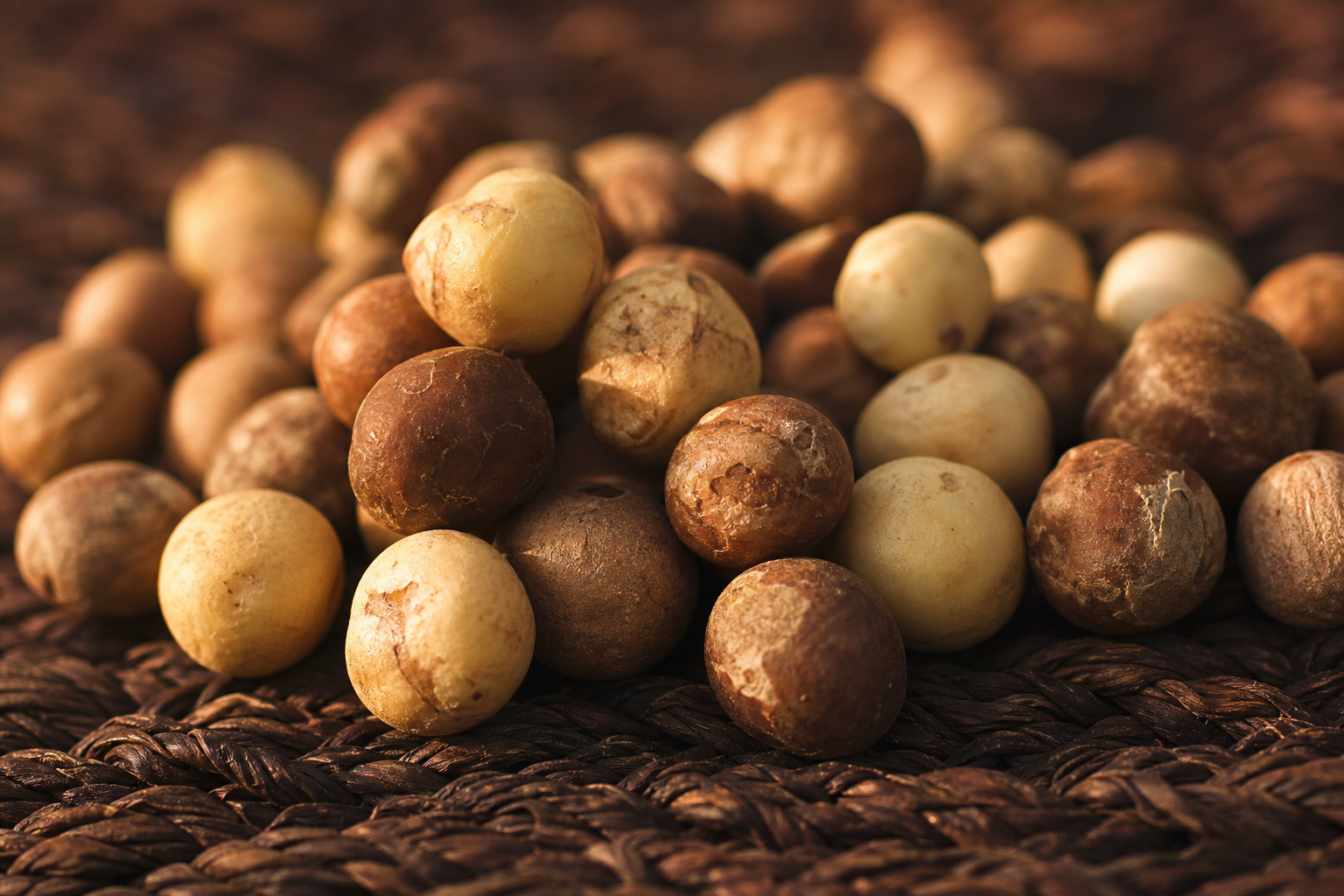
The dried nuts have a hard outer shell. Every single one is cracked open by hand to reveal the kernel inside. One by one. There is no shortcut to this step.
Roasting the Kernels
The exposed kernels are roasted over fire. The roasting level affects the final color and scent of the butter. This is where generational knowledge matters most — knowing when to stop.
Grinding into Paste
The roasted kernels are ground into a thick paste using heavy stone mills. A process that takes hours and demands serious physical strength. Traditionally done entirely by hand.
Kneading with Water
The paste is kneaded with water by hand — sometimes for hours — until the fat begins to separate from the solids. This is the most physically demanding step. No machine does this as well as trained hands.
Boiling & Skimming
The mixture is boiled. The butter rises to the surface. It is skimmed by hand. The color, texture, and purity of the final product depends on how well this step is executed.
Cooling & Shaping
The skimmed butter is cooled and shaped. What remains is pure unrefined shea butter — exactly what goes into every jar of Two Leaf Baby lotion and balm.
What their knowledge gave the world.
The women of the shea belt did not create this knowledge for export. They created it for their communities. For their children. For their bodies and their families and their daily lives.
They used shea butter on newborns from birth — for skin protection, for warmth, for dry patches and the harshness of the dry season. They used it in cooking. They used it as medicine. They used it on hair. They used it to protect skin from the harmattan — the dry wind that sweeps across the savanna every year and cracks everything it touches.
They understood this ingredient at a level that no laboratory formulation has yet improved upon.
"When we strip everything else out and arrive at two ingredients, we are not innovating. We are getting out of the way of something that has worked for a very long time."
What they built without being credited for it.
The global shea industry is worth billions of dollars. The women who produce the raw material — who hold the knowledge, do the labor, and have done so for generations — have historically received a fraction of the final value of what they create.
That is the honest reality of where this ingredient comes from.
Organizations and cooperatives across West Africa have worked for decades to change this — to pay women fairly for what they produce, to build direct trade relationships, to ensure that the communities where shea comes from benefit from the global demand their knowledge created. Fair trade shea sourcing is real and growing. It is worth seeking out and supporting.
We are a small two-person operation making handmade baby lotion in Houston. From day one we made the decision to source our shea butter directly from Ghana — from the women who make it — not from a distributor or a warehouse in the middle. We believe the people who buy our product deserve to know exactly where their ingredient comes from. So we made sure we could tell them without hesitation.
We source directly from Ghana.
From the women who make it.
Most brands buy through distributors. We buy from Baraka Shea Butter — a company that sources directly from Ghanaian women, pays them fairly, and documents the work so that the supply chain is visible all the way to the village.

Thank you.
You kept this knowledge alive for thousands of years. You passed it on without documentation, without patents, without recognition from the industries that eventually built fortunes from it.
You did it because it was right. Because it worked. Because your children and your community needed it.
Every jar of Two Leaf Baby exists because of what you built.
Houston, Texas
Two ingredients.
Thousands of years of knowledge.
Made fresh in small batches in Houston, Texas. Rooted in something much older than we are.
See Every IngredientTwo Leaf Baby
Small batch · Houston, Texas · Made to order
Made For Your Community:
Black Baby Skin | Vegan Baby Lotion | Halal Baby Lotion | Kosher Baby Lotion | Ayurvedic Baby Care
© 2026 Two Leaf Baby · Houston, TX · All rights reserved


Designed and Powered by Osiris Infrastructure